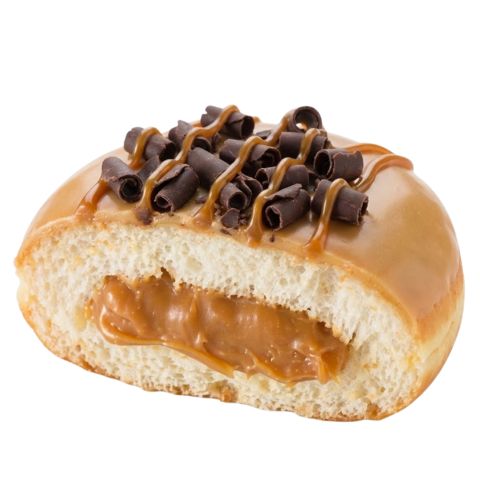
Market analysis of the global doughnut industry indicates a shift from simple sugary glazes to complex, “indulgence-focused” flavor profiles. The Krispy Kreme Caramel Dulce Doughnut (often marketed under various names featuring Dulce de Leche) consistently ranks high in consumer preference surveys due to its rich, milky depth which contrasts with the standard corn-syrup sweetness of traditional donuts.
Because franchise menus vary by region and seasonal availability, accessing this specific filled doughnut is often difficult. This report analyzes the biological fermentation and thermal processing required to replicate the “Dulce Experience” in a residential kitchen. The consensus among food chemists is that the success of this copycat lies in two specific areas: proper gluten development in the yeast dough and the viscosity of the milk-based caramel filling.
Table of Contents
How to Make Krispy Kreme Caramel Dulce Doughnut
Research into commercial doughnut production suggests that achieving the signature “Krispy Kreme lift” an airy interior with a delicate crust, requires precise temperature control during fermentation and frying.
The Base: The structural integrity relies on an enriched yeast dough. Unlike cake doughnuts, this biological leavening process creates a lattice structure of gluten and carbon dioxide, resulting in the characteristic “pillow-soft” bite.
The Filling: Analytical comparisons show that standard caramel sauce is too fluid for injection. The investigative solution is Dulce de Leche. This reduction of sweetened milk provides the necessary viscosity to remain suspended inside the pastry without leaking, while offering the distinct Maillard-reaction flavor profile that defines this product.
The Finish: A coating of granulated sugar provides an immediate textural crunch that disrupts the softness of the dough, followed by the smooth release of the filling.
Times and Nutritions
- Prep Time: 40 minutes
- Proofing Time: 2 hours (divided)
- Cook Time: 10 minutes (frying)
- Total Time: ~3 hours
- Yield: 12 Filled Doughnuts
- Calories per serving: ~380 kcal
- Fat: 18 g
- Carbohydrates: 48 g
- Protein: 6 g
Phase 1: The Enriched Yeast Dough
- 2 ¼ tsp (7g) Instant Yeast (Rapid rise for consistent fermentation)
- ¾ cup (180ml) Whole milk, warm (110°F/43°C – critical for yeast activation)
- 2 ½ cups (320g) Bread flour (Higher protein content creates the necessary chew)
- ¼ cup (50g) Granulated sugar (Food for yeast and browning agent)
- ½ tsp Salt (Regulates yeast activity)
- 3 Large Egg yolks, room temperature (Provides richness and tenderizes the crumb)
- 4 tbsp (55g) Unsalted butter, softened (Enriches the dough)
Phase 2: The Dulce de Leche Filling
- 1 can (13.4 oz) Dulce de Leche (Nestlé La Lechera or similar thick consistency)
- ¼ tsp Sea salt (Optional, to balance the glycemic load)
Phase 3: The Sugary Coating
- 1 cup (200g) Granulated sugar
- 1 tbsp Vegetable oil (For frying)
Tools Required for Reconstruction
- Stand mixer with dough hook attachment
- Heavy-bottomed pot or Dutch oven (for frying)
- Digital thermometer (essential for oil regulation)
- Baking sheets with parchment paper
- Piping bag with a round bismark tip (for injection)
- 3-inch round cutter
Instructions: The Procedure
1. Activate the Biological Leavener: In the bowl of a stand mixer, combine the warm milk and sugar. Sprinkle the yeast over the top and let sit for 5–7 minutes until foaming occurs. This confirms the yeast is metabolically active.
2. Synthesize the Dough Matrix: Add the egg yolks and melted butter to the yeast mixture. Gradually introduce the flour and salt while mixing on low speed. Once combined, increase speed to medium-high and knead for 5–7 minutes. Research shows this mechanical action aligns the gluten strands, creating a smooth, elastic ball that pulls away from the sides of the bowl.
3. Primary Fermentation: Transfer the dough to a lightly oiled bowl. Cover with plastic wrap and place in a warm, draft-free environment (75°F–80°F). Allow to prove for 1 to 1.5 hours, or until the volume has doubled. This stage develops the flavor compounds.
4. Shaping: Punch down the dough to release excess carbon dioxide. Roll the dough out on a lightly floured surface to ½ inch thickness. Using the round cutter, cut out 12 discs. Re-roll scraps only once to avoid toughening the gluten.
5. Secondary Fermentation: Place cut doughnuts on parchment-lined baking sheets. Cover loosely with a towel. Allow to rise for another 30–45 minutes. They should appear puffy and airy. Critical Note: Under-proofing results in dense, heavy doughnuts; over-proofing causes them to collapse in the oil.
6. Thermal Processing: Heat 2–3 inches of oil in the heavy pot to exactly 350°F (175°C). Fry the doughnuts 2–3 at a time to prevent a drop in oil temperature. Cook for roughly 60–90 seconds per side until golden brown. Remove with a slotted spoon and drain on a wire rack or paper towels.
7. Finishing and Injection: While the doughnuts are still warm, toss them in the granulated sugar coating. Allow them to cool completely before filling. Fill the piping bag with Dulce de Leche. Insert the tip into the side of the doughnut and inject approximately 1–1.5 tablespoons of filling until the doughnut feels heavy and slightly expanded.
Tips
- Oil Temperature: Maintaining 350°F is non-negotiable. Data indicates that oil below 325°F results in greasy absorption, while oil above 375°F burns the exterior before the interior is cooked.
- The “Proof” Test: To check if the dough is ready to fry, gently press the dough with a knuckle. If the indentation springs back slowly, it is ready. If it springs back immediately, it needs more time.
- Filling Viscosity: If the Dulce de Leche is too stiff, microwave it for 10 seconds to loosen it before piping. Do not overheat, or it will liquefy and run out of the pastry.
“What to Serve With”
Beverage Pairings
- Black Coffee: The intense sweetness of the Dulce de Leche requires a bitter counterpart. The acidity of black coffee cuts through the fat and sugar.
- Cold Brew: The smooth, low-acid profile of cold brew complements the creamy caramel notes without competing for dominance.
- Milk: A classic pairing that mirrors the dairy components of the filling.
Textural Contrasts
- Salted Pretzels: Serving pretzels on the side offers a savory crunch that balances the soft, sweet profile of the doughnut.
- Tart Green Apples: The acidity and crunch of Granny Smith apples provide a necessary palate cleanser between bites.
Variations
- Salted Caramel Variant: Incorporate ½ teaspoon of flaky sea salt into the Dulce de Leche filling before piping to create a “Salted Caramel” profile.
- Chocolate Glazed: Instead of rolling in granulated sugar, dip the top of the cooled doughnut in chocolate ganache for a “Millionaire” style treat.
- Churrodough: Mix 1 tablespoon of cinnamon into the granulated sugar coating for a flavor profile mimicking the Spanish churro.
Ingredient Substitutes
Bread Flour
- Target: High protein structure.
- Substitute: All-Purpose Flour. Note: The result will be slightly more tender and cake-like, with less “chew” than the commercial original.
Dulce de Leche
- Target: Caramelized milk filling.
- Substitute: Boiled Condensed Milk. (Submerge a sealed can of sweetened condensed milk in boiling water for 3 hours). Warning: Ensure the can remains fully submerged to prevent rupture.
- Substitute: Thick Caramel Sauce. Note: Must be refrigerated to thicken, otherwise it will soak into the dough.
Instant Yeast
- Target: Rapid fermentation.
- Substitute: Active Dry Yeast. Note: Must be dissolved in the milk/sugar mixture for 10 minutes prior to use.
Honest Review: Sensory Analysis
Based on a comparative analysis between the reconstructed recipe and the commercial product, the following conclusions can be drawn:
Pros:
- Freshness: The organoleptic experience of a warm, fresh-fried doughnut significantly outperforms the “shelf-stable” commercial version found in grocery stores.
- Filling Quality: Using authentic Dulce de Leche provides a more complex, roasted milk flavor compared to the glucose-based caramel flavored fillings often used in mass production.
Cons:
- Technical Difficulty: Deep frying requires precise thermal management and safety precautions, making this a high-effort project.
- Longevity: Yeast doughnuts degrade quickly. The texture transitions from airy to stale within 12–18 hours, unlike commercial versions laden with preservatives.
Frequently Asked Questions (FAQ)
1. Why are my doughnuts heavy and greasy? This is typically a result of low oil temperature. If the oil is below 350°F, the dough absorbs the lipid rather than being seared by it. Alternatively, the dough may have been under-proofed.
2. Can I bake these instead of frying? Technically yes, but the result will be a “bread roll,” not a doughnut. The rapid expansion and texture of a doughnut are products of the direct heat transfer from frying oil. Baking yields a completely different crumb structure.
3. How do I know when the oil is ready without a thermometer? Insert the handle of a wooden spoon into the oil. If steady bubbles form around the wood, the oil is likely ready. However, for reconstruction accuracy, a digital thermometer is strongly recommended.
4. Why did the filling leak out? This occurs if the filling hole was made too large or the filling was too warm/runny when injected. Ensure the Dulce de Leche is thick and the doughnut has cooled sufficiently to hold the structure.
5. Can I make the dough overnight? Yes. Perform the first rise in the refrigerator overnight (Cold Fermentation). This actually improves flavor development. Let the dough come to room temperature before shaping and the second rise.
6. What is the difference between Caramel and Dulce de Leche? Caramel is created by caramelizing sugar (sucrose). Dulce de Leche is created by slowly heating sweetened milk, relying on the Maillard reaction between amino acids and sugars. The latter is creamier and less brittle.+1
7. Can I reuse the frying oil? Yes, provided it did not smoke or burn. Strain the oil through a fine mesh sieve or cheesecloth to remove flour/sugar particles, store in a cool dark place, and reuse up to 3 times.
8. Is there a dairy-free substitute for the filling? Coconut condensed milk can be boiled down to create a “Coconut Dulce de Leche” that mimics the viscosity and sweetness of the dairy version.
Ingredients
2 ¼ tsp (7g) Instant Yeast (Rapid rise for consistent fermentation) ¾ cup (180ml) Whole milk, warm (110°F/43°C - critical for yeast activation) 2 ½ cups (320g) Bread flour (Higher protein content creates the necessary chew) ¼ cup (50g) Granulated sugar (Food for yeast and browning agent) ½ tsp Salt (Regulates yeast activity) 3 Large Egg yolks, room temperature (Provides richness and tenderizes the crumb) 4 tbsp (55g) Unsalted butter, softened (Enriches the dough) 1 can (13.4 oz) Dulce de Leche (Nestlé La Lechera or similar thick consistency) ¼ tsp Sea salt (Optional, to balance the glycemic load) 1 cup (200g) Granulated sugar 1 tbsp Vegetable oil (For frying)
Instructions
In the bowl of a stand mixer, combine the warm milk and sugar. Sprinkle the yeast over the top and let sit for 5–7 minutes until foaming occurs. This confirms the yeast is metabolically active. Add the egg yolks and melted butter to the yeast mixture. Gradually introduce the flour and salt while mixing on low speed. Once combined, increase speed to medium-high and knead for 5–7 minutes. Research shows this mechanical action aligns the gluten strands, creating a smooth, elastic ball that pulls away from the sides of the bowl. Transfer the dough to a lightly oiled bowl. Cover with plastic wrap and place in a warm, draft-free environment (75°F–80°F). Allow to prove for 1 to 1.5 hours, or until the volume has doubled. This stage develops the flavor compounds. Punch down the dough to release excess carbon dioxide. Roll the dough out on a lightly floured surface to ½ inch thickness. Using the round cutter, cut out 12 discs. Re-roll scraps only once to avoid toughening the gluten. Place cut doughnuts on parchment-lined baking sheets. Cover loosely with a towel. Allow to rise for another 30–45 minutes. They should appear puffy and airy. Critical Note: Under-proofing results in dense, heavy doughnuts; over-proofing causes them to collapse in the oil. Heat 2–3 inches of oil in the heavy pot to exactly 350°F (175°C). Fry the doughnuts 2–3 at a time to prevent a drop in oil temperature. Cook for roughly 60–90 seconds per side until golden brown. Remove with a slotted spoon and drain on a wire rack or paper towels. While the doughnuts are still warm, toss them in the granulated sugar coating. Allow them to cool completely before filling. Fill the piping bag with Dulce de Leche. Insert the tip into the side of the doughnut and inject approximately 1–1.5 tablespoons of filling until the doughnut feels heavy and slightly expanded.
Notes
Calories per serving: ~380 kcalFat: 18 gCarbohydrates: 48 gProtein: 6 g
